
Pool Planning Decision Tool
Planning a pool is exciting, but the process quickly becomes overwhelming. This project explores how structured decision architecture can guide homeowners from early inspiration to confident action.
Role
Scope
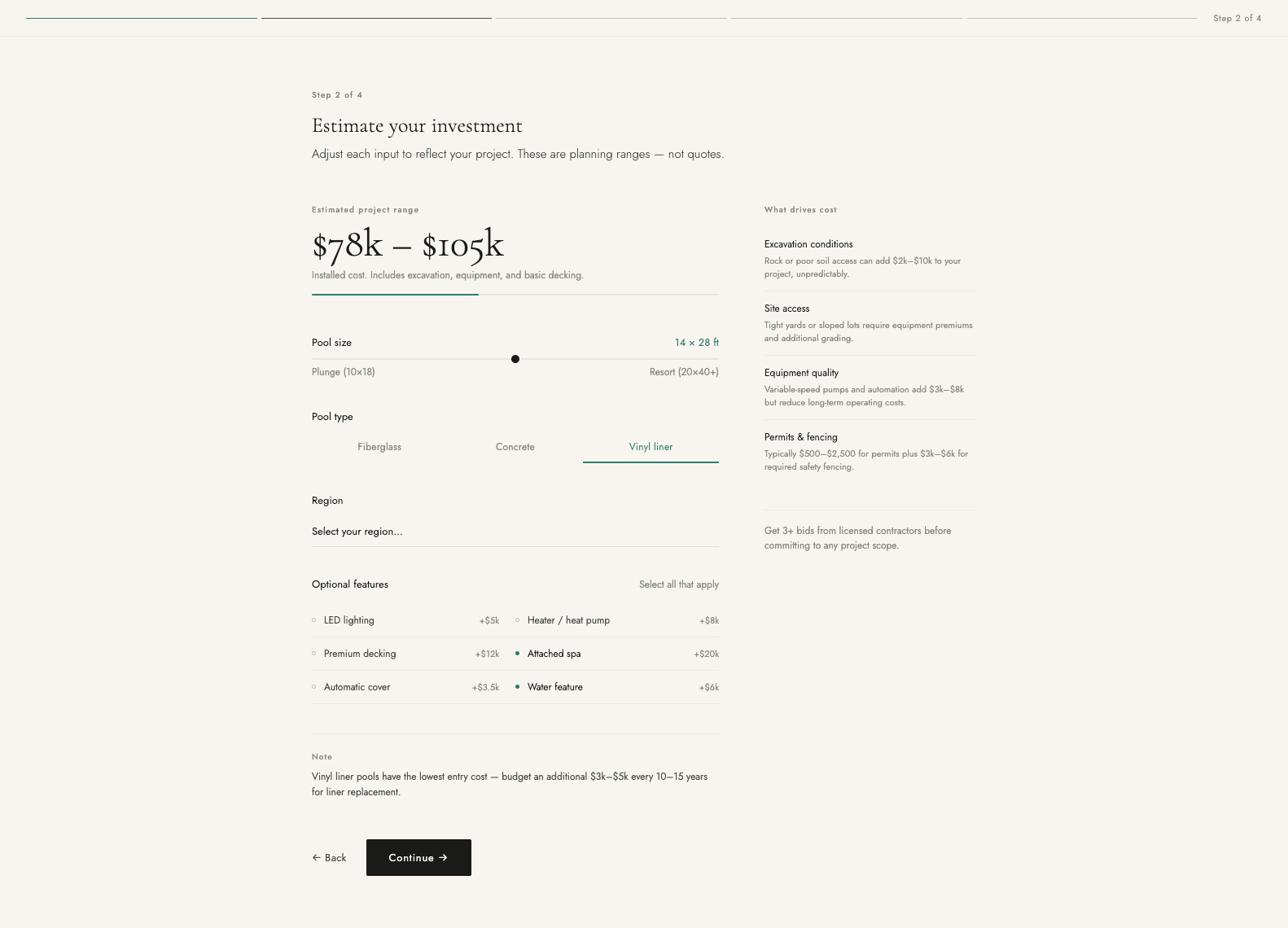
Why this project matters
Suddenly the process involves trade-offs around yard conditions, pool type, installation timeline, permits, ongoing costs, and contractor selection. Most people don’t have a roadmap for working through those decisions, so they either stall out or reach out to builders before they’re ready.
I wanted to explore what it would look like to create a calmer, more structured planning experience—one that helps people understand the decision landscape before they enter a sales conversation.
- Fragmented planning information
- Premature contractor outreach
- Unrealistic budget expectations
- Decision fatigue during proposal comparison
- No clear sequence for what to figure out first
Reduce friction. Build confidence.
Shorten the cycle.
Instead of treating the experience like a quote form or a feature-heavy calculator, I wanted it to feel like a structured guide—something that helps people understand what matters, when it matters, and how early choices shape everything that follows.
Decision patterns observed
Users think in a straight line, but decisions aren’t
Most users start with inspiration (what they want) before understanding what’s feasible. This creates tension once real constraints enter the picture.
The hardest moment often isn’t getting started—it’s choosing. Once proposals and trade-offs appear, many buyers realize they never had a framework for evaluating them.
A staged framework for complex decisions
Planning a pool is not a linear process; it’s a series of interdependent decisions shaped by lifestyle priorities, physical constraints, and financial considerations.
I structured the journey into five stages, not to force a rigid sequence, but to give people a clearer mental model for how these decisions build toward readiness.

01
02
03
04
05
Users begin by exploring what a pool could look like in their lives. At this point, the focus is emotional: lifestyle, atmosphere, family use, and the kind of experience they want to create.
02
Goals & Constraints
03
Cost & Timeline
04
Readiness
Before talking to contractors, users need more than preferences, they need confidence. This stage helps them check site planning, permitting awareness, and whether they’re actually prepared to move forward.
05
Action
From linear flow to decision architecture
Traditional planning tools often assume users move neatly through a fixed sequence of steps. In reality, decision-making is iterative: users revisit earlier assumptions as budget, site conditions, or priorities become clearer.
This framework acknowledges that reality. Instead of presenting the process as a rigid flow, it treats planning as a system of connected decisions that gradually builds toward confidence and action.
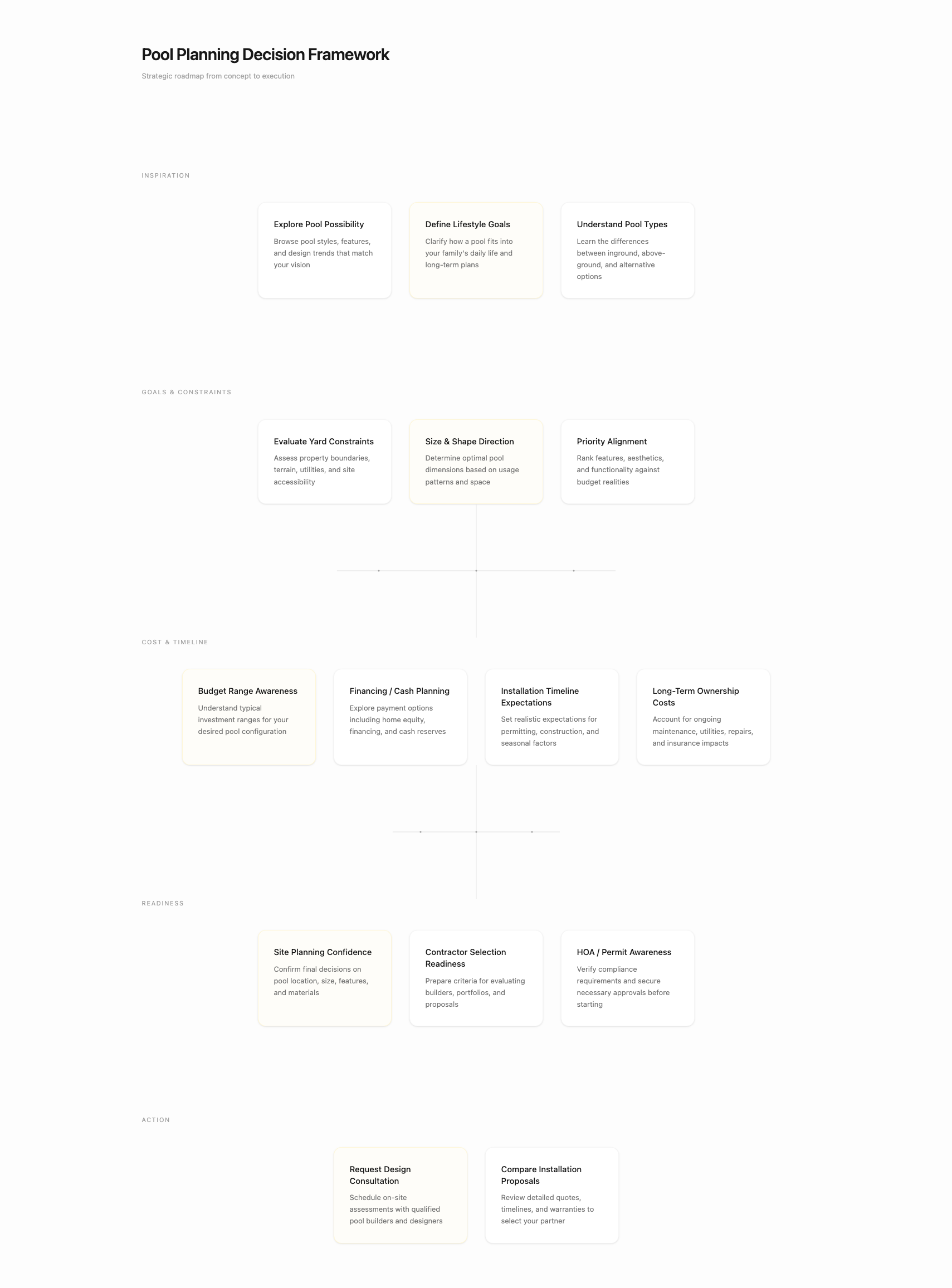
Structural Decisions
Key structural choices and why they matter
The experience starts with low-pressure exploration and only gradually introduces decisions that feel heavier, like cost, permits, and contractor engagement.
Decision clusters instead of feature lists
Instead of pushing users straight into conversion, the framework helps them reach a more informed state first, making later contractor conversations more productive.
How the interface builds clarity and trust
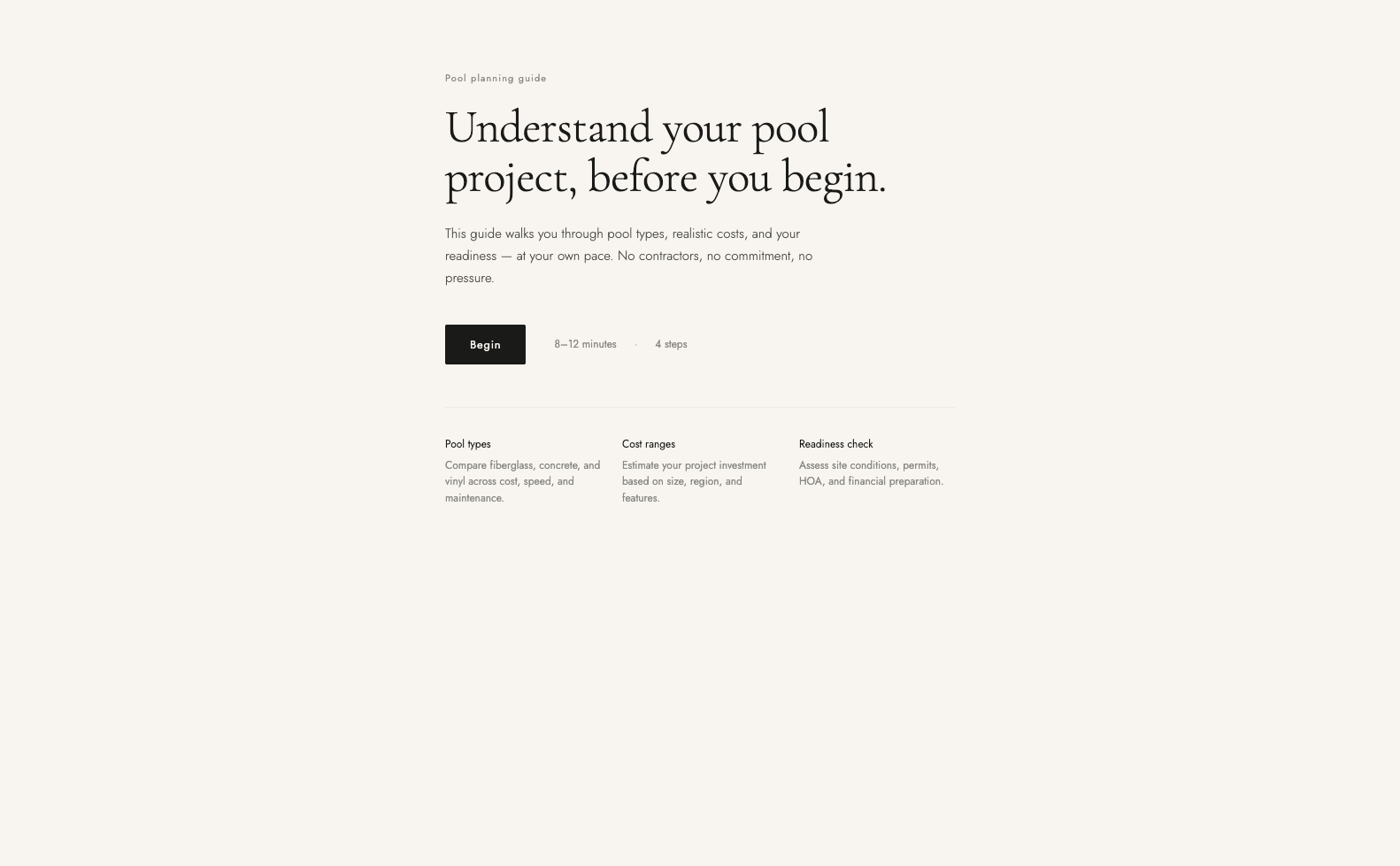
Before asking users to make choices, the experience clearly frames what’s ahead: what decisions they’ll make, how long it takes, and what they’ll get out of it.
This reduces hesitation and sets expectations upfront, making users more comfortable engaging with the tool.
The pool type comparison screen turns abstract differences into something easier to evaluate. Instead of forcing users to guess, it reveals meaningful trade-offs (cost, speed, customization, maintenance) so users can understand how each decision impacts the overall project.
Outcomes
What the tool enables
This concept isn’t about generating outputs, it’s about changing how people approach a complex decision.
By structuring the planning process into clear stages, the tool creates conditions for more confident, informed action.
Clarity before commitment
Users can explore options and understand trade-offs before entering a contractor conversation, reducing premature decisions and misaligned expectations.
By the time users reach proposal evaluation, they have a clearer sense of priorities, budget range, and constraints, making decisions less reactive.
What I would refine next
I’d also want to test how users respond to the staged framework itself: whether the sequence feels intuitive, where they hesitate, and how often they revisit earlier decisions once cost and feasibility enter the picture.
More than anything, this project reinforced how much UX value can come from structuring a decision process well. The interface matters, but the bigger opportunity is helping people feel oriented, informed, and ready to act.
Wireframes
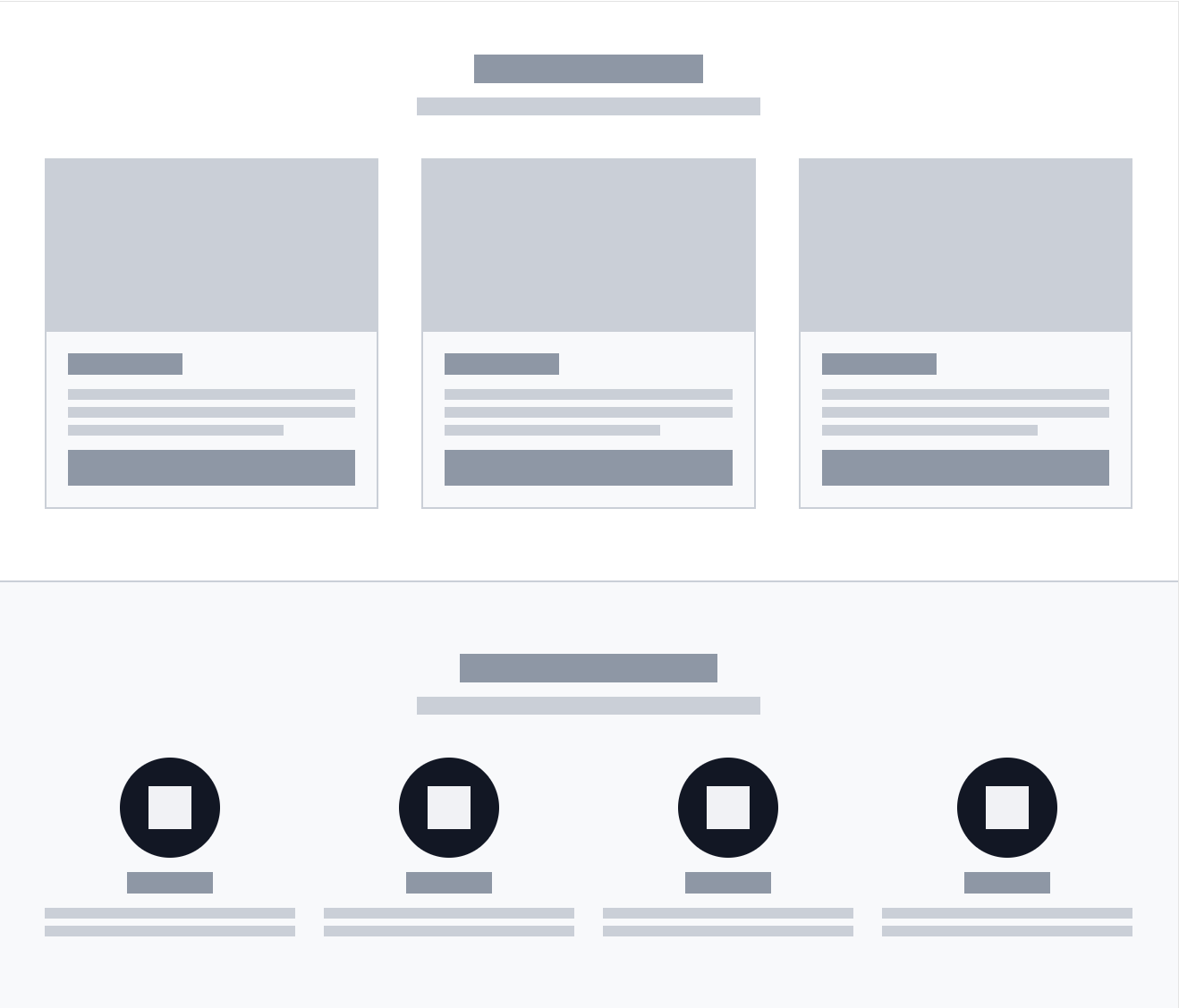
Early homepage wireframes created in Figma to establish content hierarchy and conversion flow before visual design.
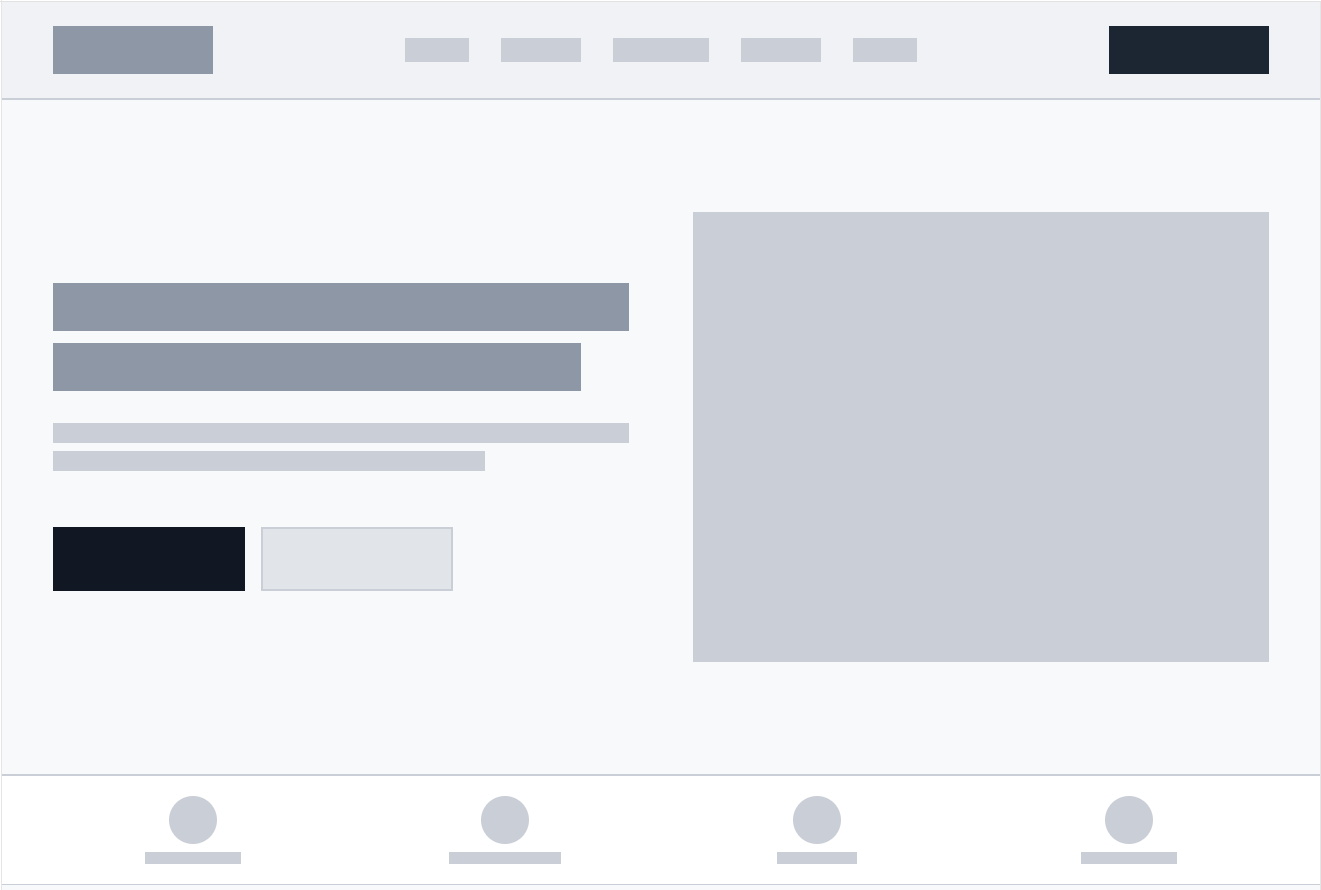
Hero & Primary Value Proposition
Early homepage wireframes created in Figma to establish content hierarchy and conversion flow before visual design.

Next Project
Urban Oasis Pools of Texas