
Case Study
Red Zone Games — UX Redesign & Registration Flow Optimization
Role
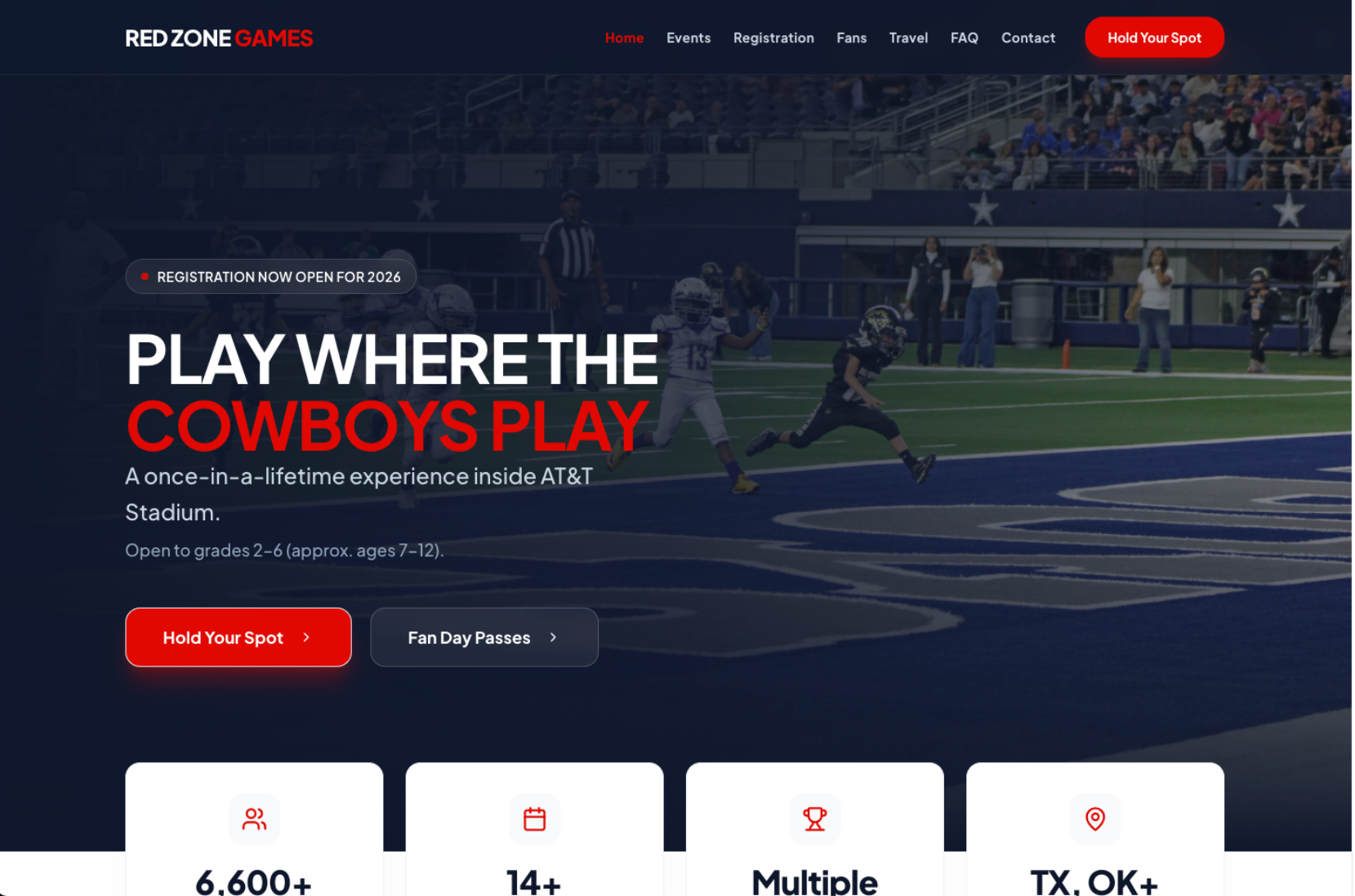
Current Website
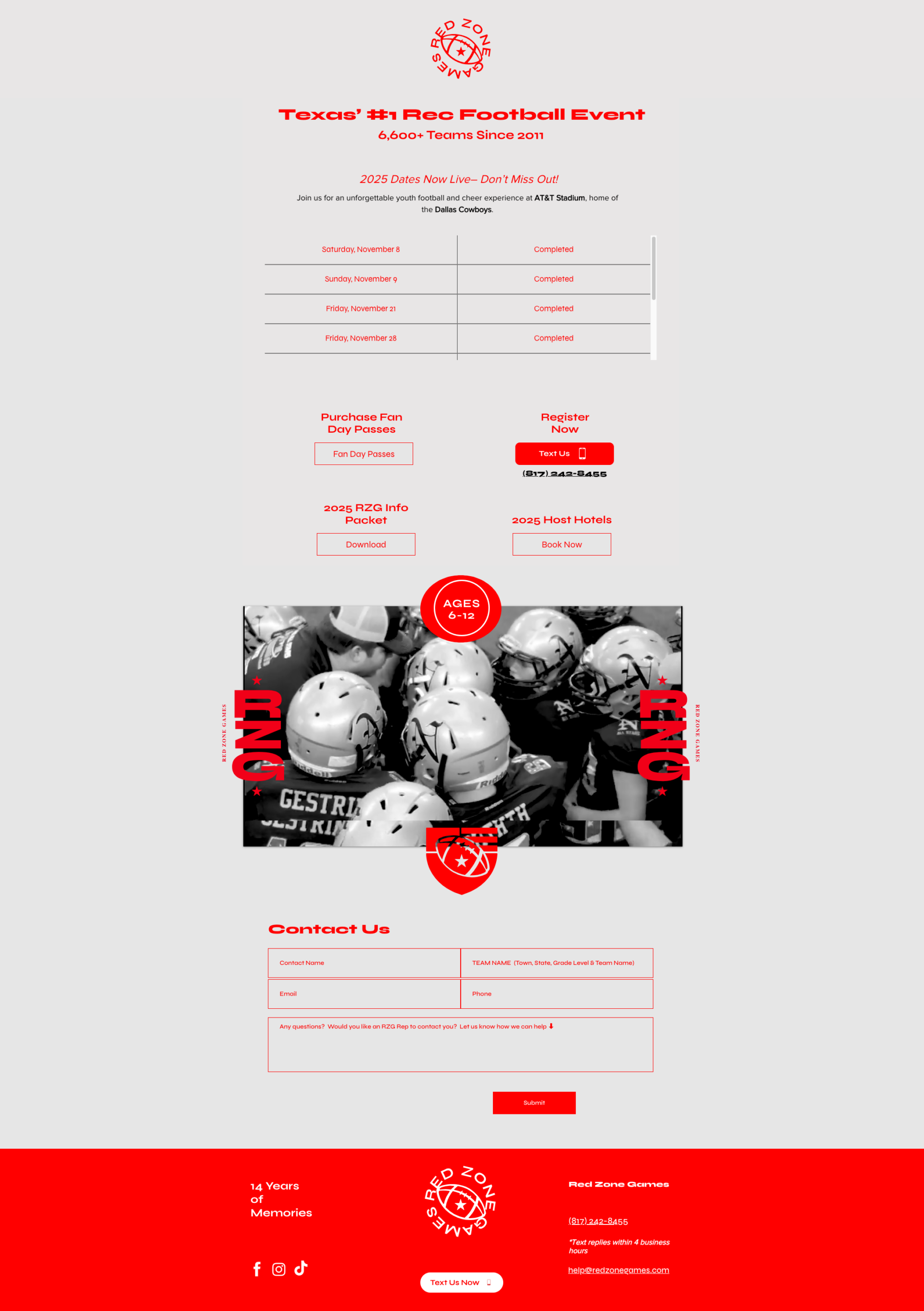
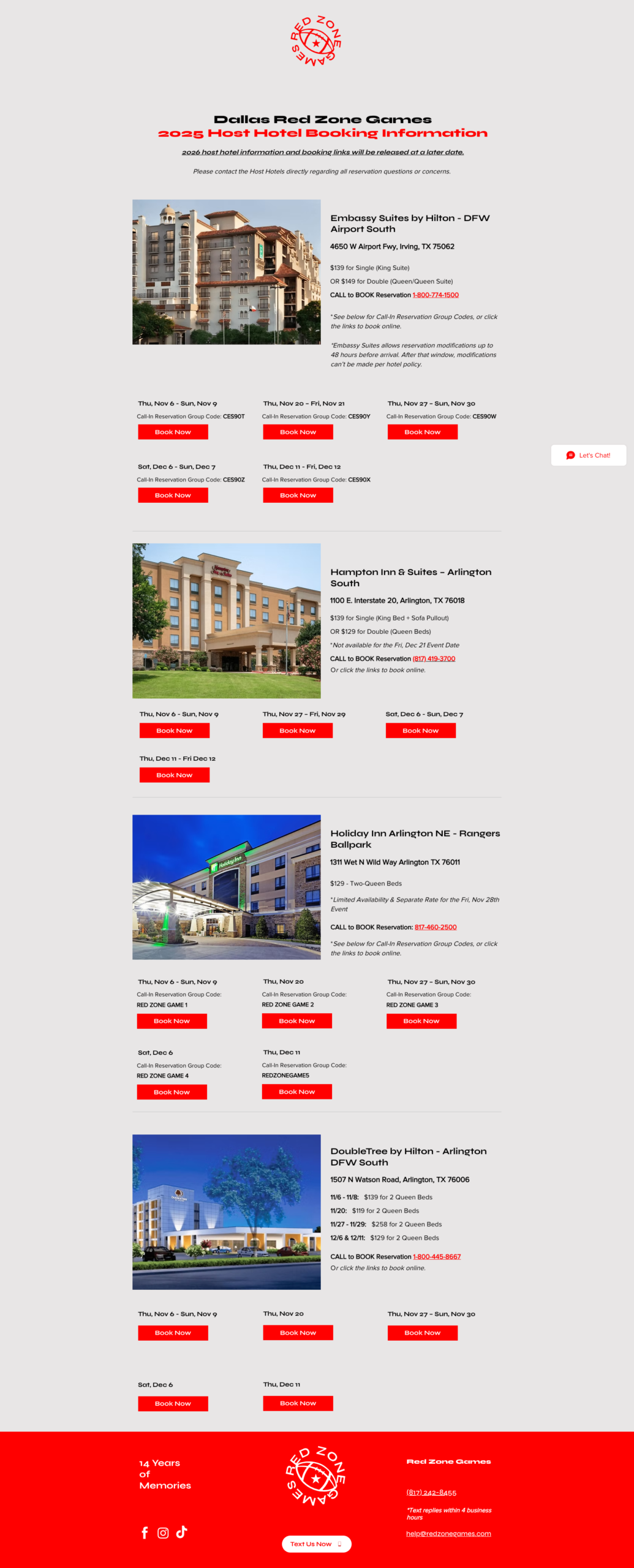
While the site contains important information about events, registration, and travel, the current structure makes key tasks difficult to locate.
Users often need to scroll through dense pages to find information such as:
• event availability
• registration instructions
• hotel bookings
• fan pass purchases
This layout creates friction for coaches trying to quickly understand how to register their team.
The Problem
• view upcoming events
• understand registration requirements
• secure their team’s spot
• purchase fan passes
• find travel and hotel information
Key actions such as registering a team or booking travel were visually and structurally deprioritized.
Important information was distributed across multiple pages without a clear progression, making the process especially difficult for first-time visitors.
As a result, users were required to piece together next steps on their own instead of being guided through a clear participation journey.
Constraints
- The site needed to remain easy for the organization to update internally.
- Event details and availability change frequently throughout the season.
- The redesign needed to support multiple events and future expansion.
- The structure needed to clearly guide first-time coaches through registration.
UX Audit
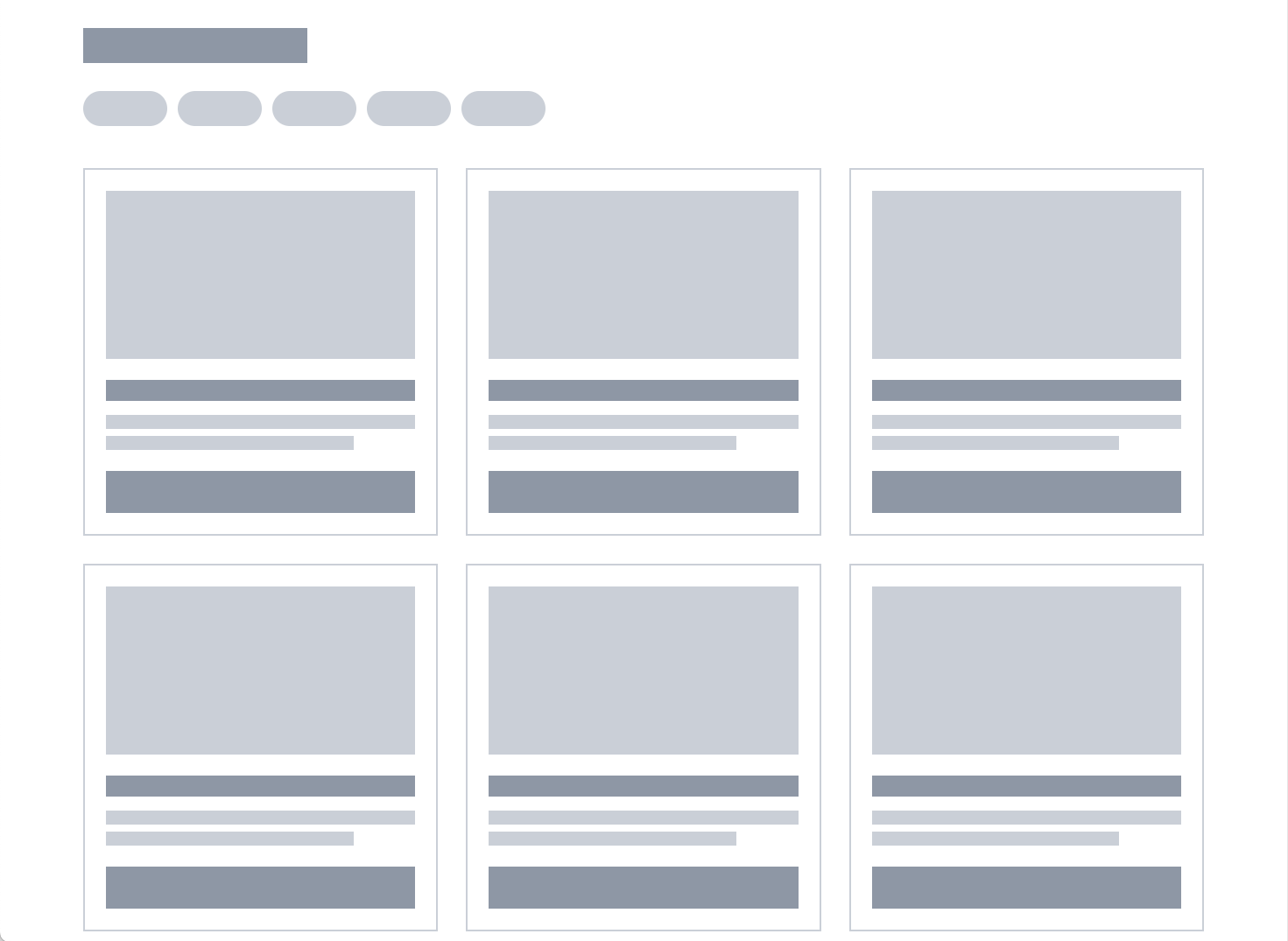
Early homepage wireframes created in Figma to establish content hierarchy and conversion flow before visual design.
Navigation Hierarchy
This makes it difficult for users to quickly locate what they need.
Information Density
Users must scan long sections to find key actions such as purchasing fan passes or contacting organizers.
Coaches looking to register a team may not immediately recognize the next step in the process.
Structure & Key Decisions
- Reorganized the site architecture around primary user tasks.
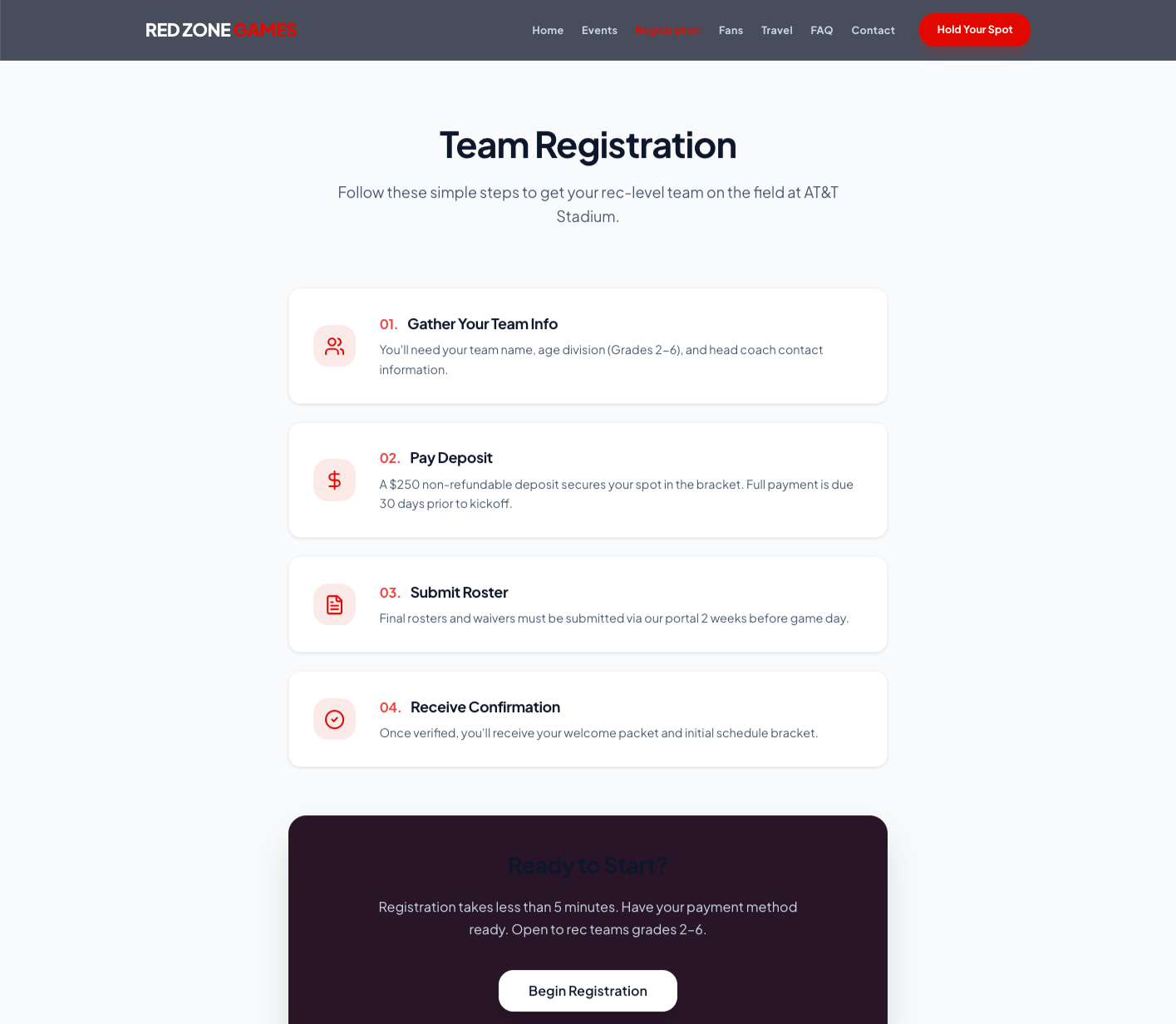
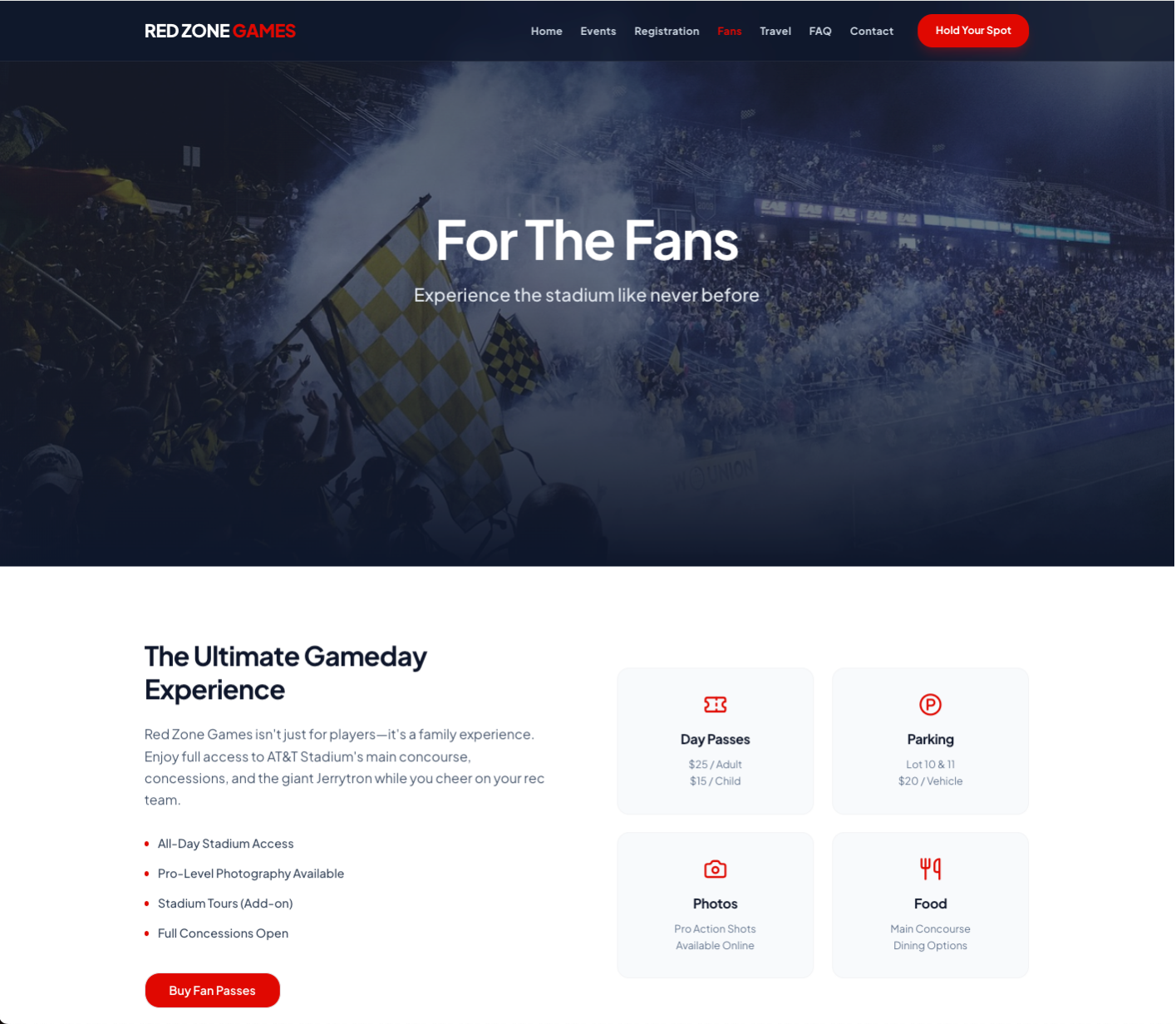
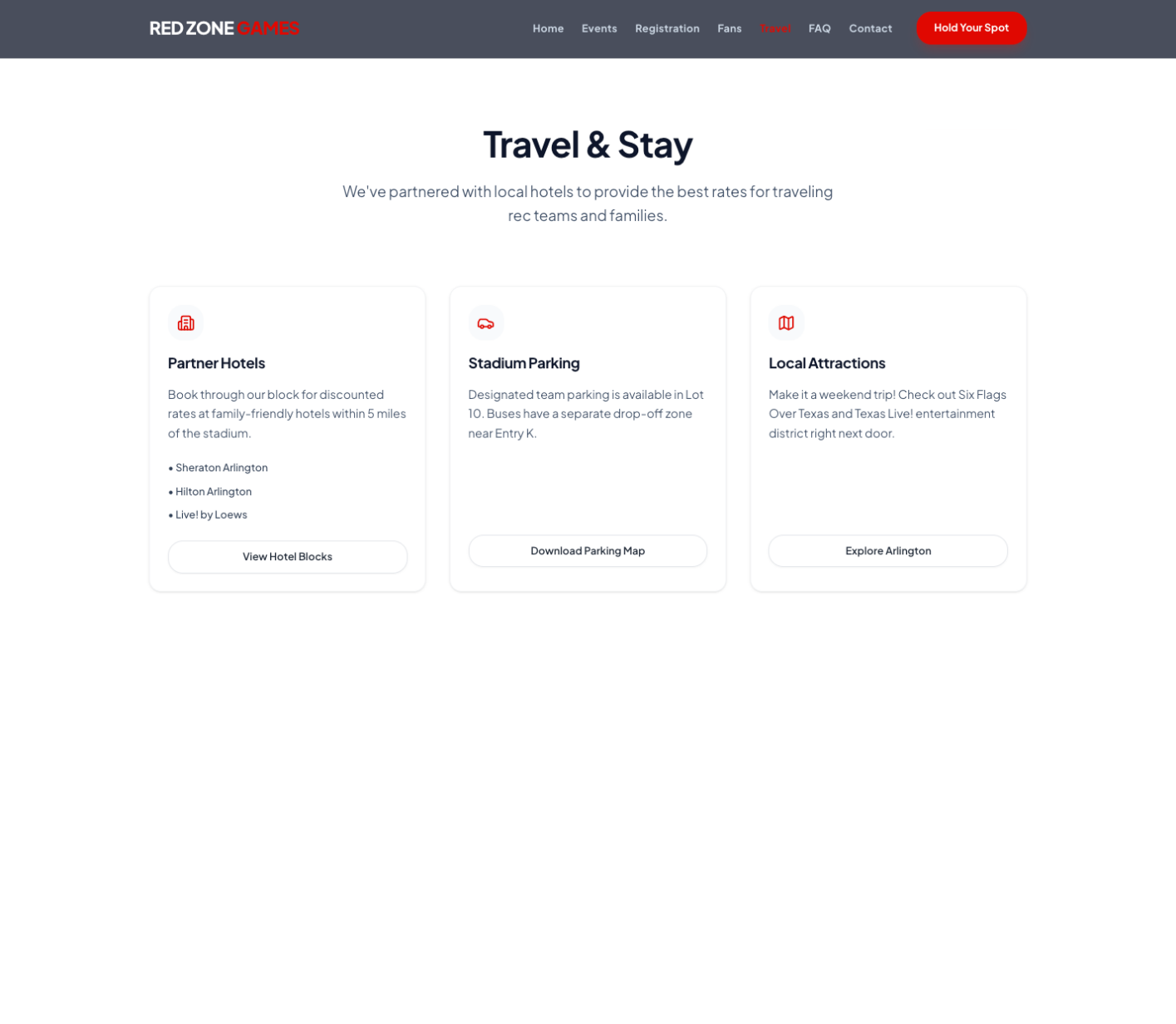
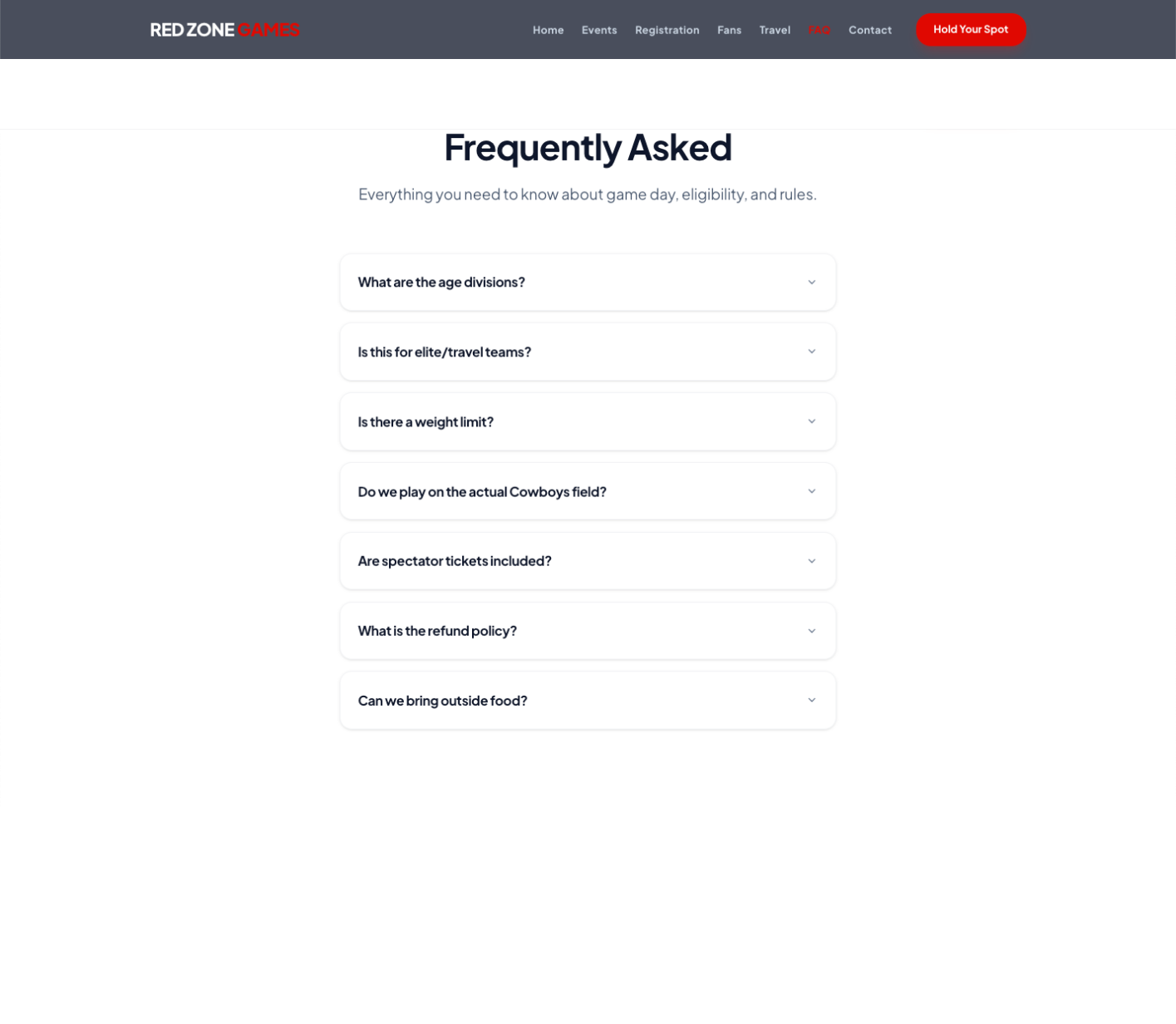
- Created dedicated pages for Events, Registration, Fans, Travel, FAQ, and Contact.
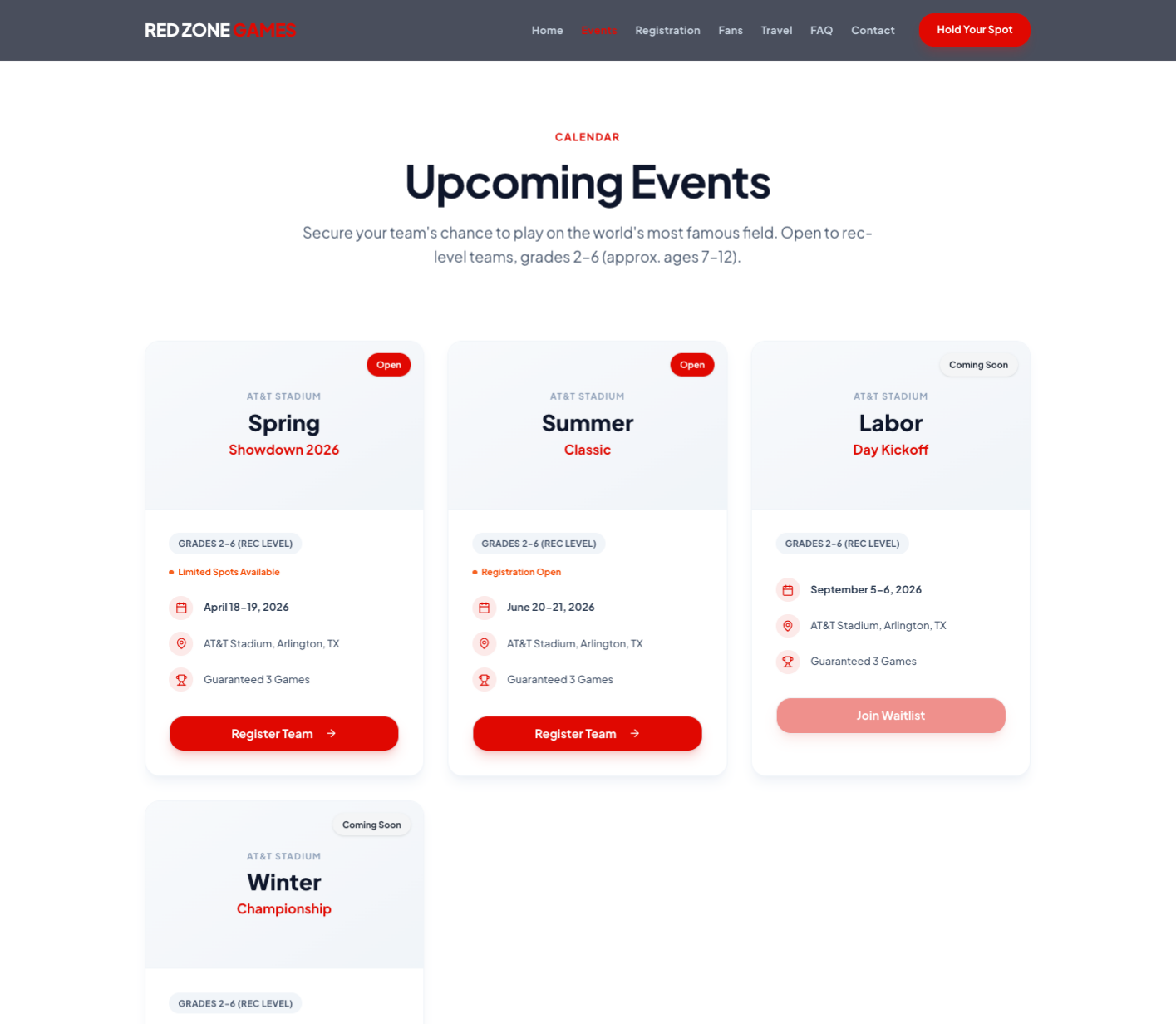
- Introduced event cards to make upcoming tournaments easier to scan.
- Designed a step-by-step registration explanation to clarify the process.
- Elevated primary calls-to-action such as “Register Team” and “Hold Your Spot.”
Wireframes

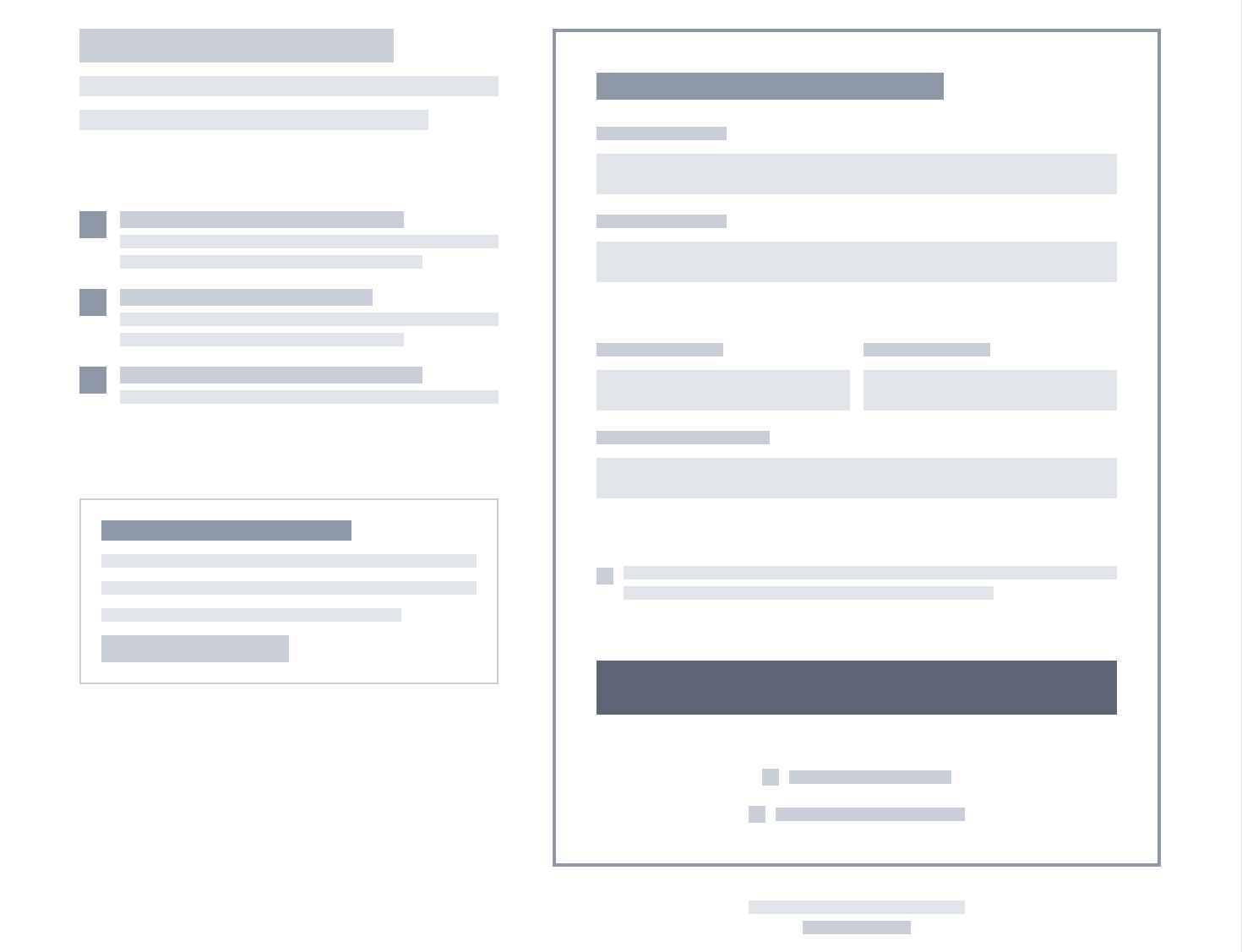
Hero & Event Conversion Entry
Wireframes
Early homepage wireframes created in Figma to establish content hierarchy and conversion flow before visual design.
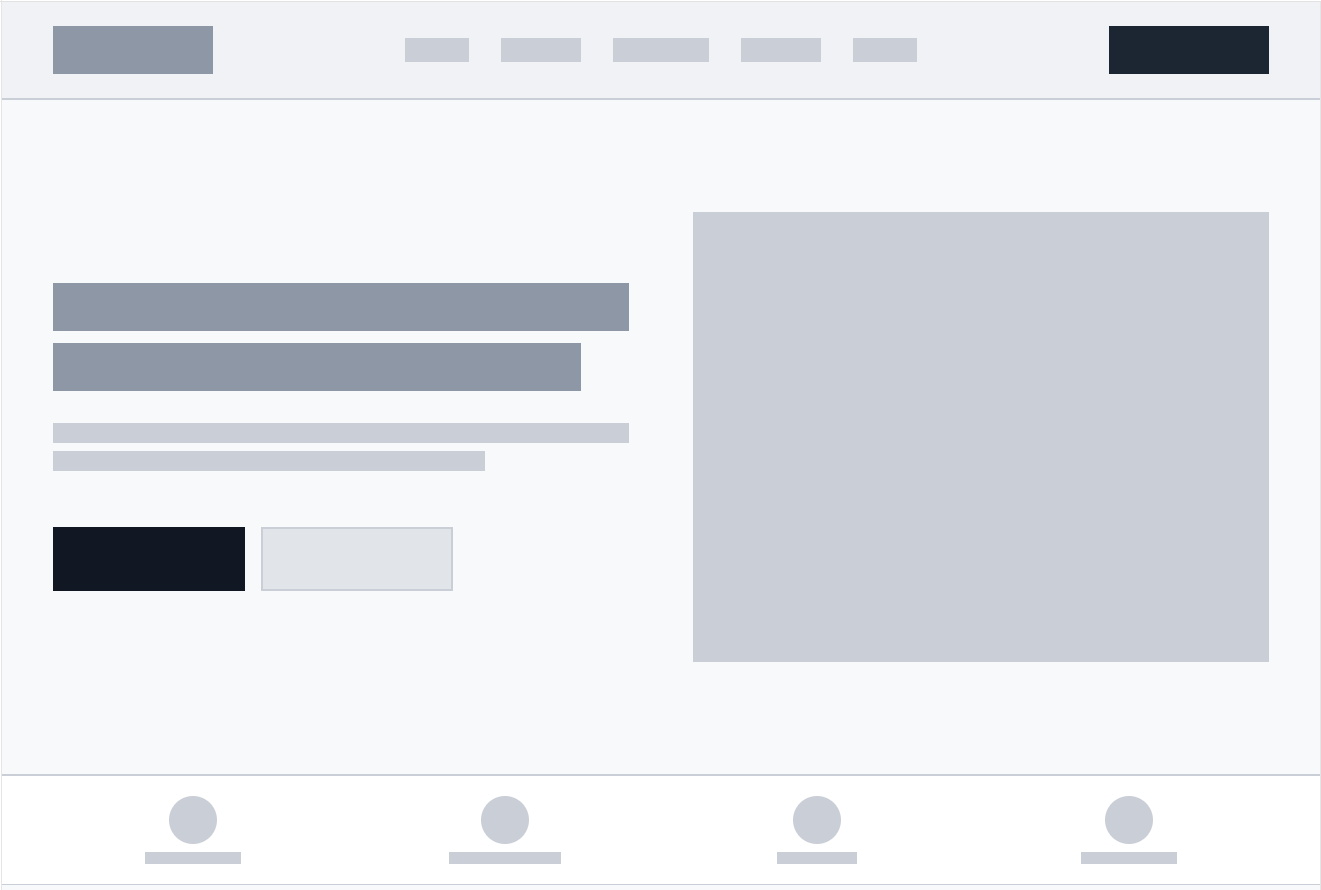
Hero & Primary Value Proposition
Early homepage wireframes created in Figma to establish content hierarchy and conversion flow before visual design.
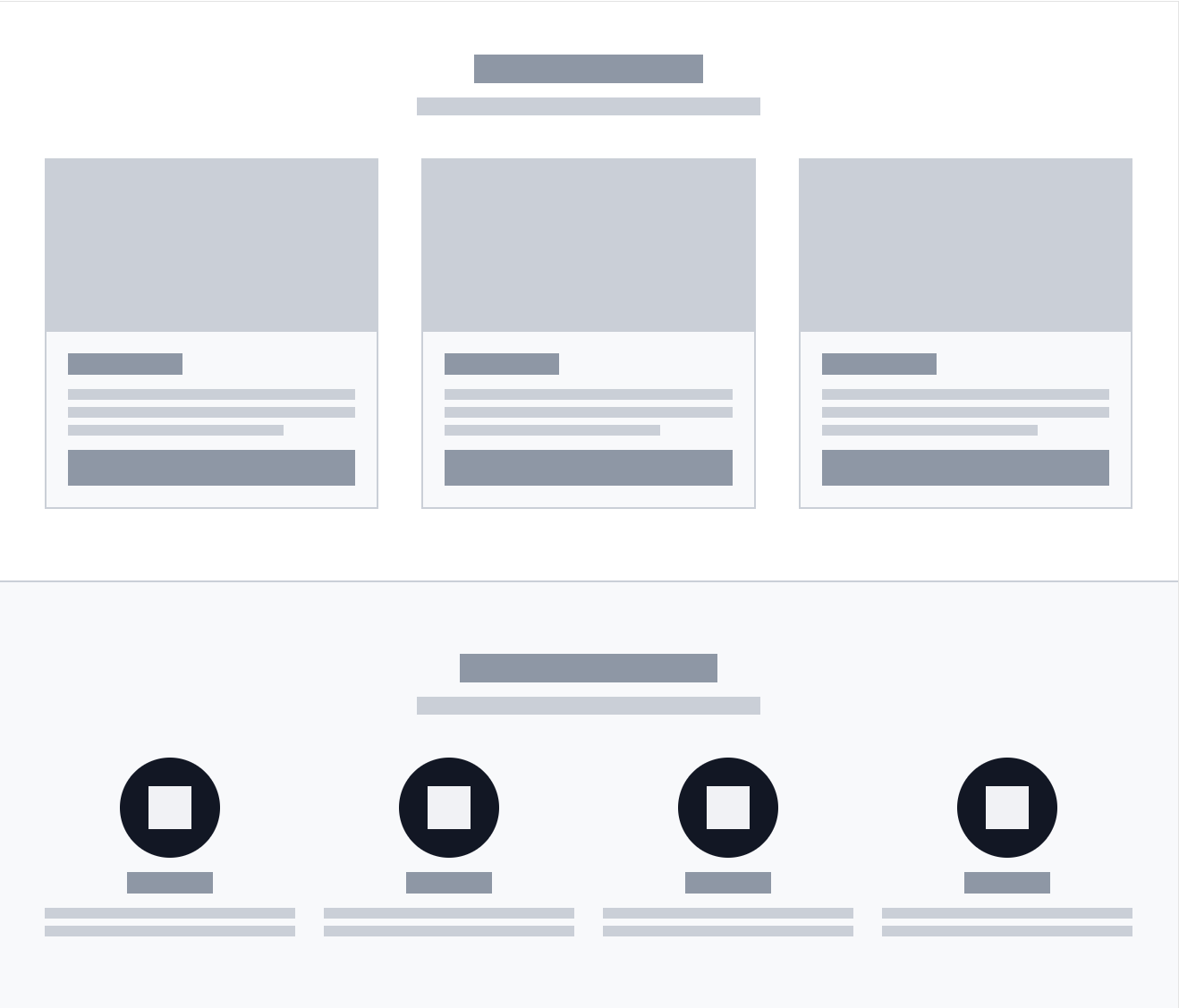

Key Screens
Homepage
Pool Model Grid
Installation Process
Gallery Section
Service Area
Quote Request Form
Redesign Overview
Key improvements include:
• Coaches
• Fans
• Traveling families
This allows users to quickly find the information most relevant to them.
Outcome
Key improvements include:
-
clearer primary CTA hierarchy reduces hesitation
-
step-based structure supports commitment psychology
-
deposit framing lowers perceived risk
The new architecture also allows the organization to scale the website as new events and locations are added.
Reflection
With additional time, I would expand the site to include event-specific landing pages and deeper informational resources tailored to both teams and families.
This project reinforced how important it is to structure websites around user goals rather than internal content organization.
When key decisions (e.g. securing a team spot) are supported by clear navigation, progressive disclosure, and well-placed calls to action, users can move forward with greater confidence.
By simplifying navigation and clarifying the registration journey, the redesign helps teams more easily understand how to participate in Red Zone Games events while creating a scalable structure for future growth.
Next Project
Like what you see?